
6 – Levels & Transits
Quiz Summary
0 of 100 Questions completed
Questions:
Information
You have already completed the quiz before. Hence you can not start it again.
Quiz is loading…
You must sign in or sign up to start the quiz.
You must first complete the following:
Results
Results
0 of 100 Questions answered correctly
Your time:
Time has elapsed
You have reached 0 of 0 point(s), (0)
Earned Point(s): 0 of 0, (0)
0 Essay(s) Pending (Possible Point(s): 0)
Categories
- Not categorized 0%
- 1
- 2
- 3
- 4
- 5
- 6
- 7
- 8
- 9
- 10
- 11
- 12
- 13
- 14
- 15
- 16
- 17
- 18
- 19
- 20
- 21
- 22
- 23
- 24
- 25
- 26
- 27
- 28
- 29
- 30
- 31
- 32
- 33
- 34
- 35
- 36
- 37
- 38
- 39
- 40
- 41
- 42
- 43
- 44
- 45
- 46
- 47
- 48
- 49
- 50
- 51
- 52
- 53
- 54
- 55
- 56
- 57
- 58
- 59
- 60
- 61
- 62
- 63
- 64
- 65
- 66
- 67
- 68
- 69
- 70
- 71
- 72
- 73
- 74
- 75
- 76
- 77
- 78
- 79
- 80
- 81
- 82
- 83
- 84
- 85
- 86
- 87
- 88
- 89
- 90
- 91
- 92
- 93
- 94
- 95
- 96
- 97
- 98
- 99
- 100
- Current
- Review
- Answered
- Correct
- Incorrect
-
Question 1 of 100
1. Question
A use of a level is to establish elevations and grades.
CorrectIncorrect -
Question 2 of 100
2. Question
A use of a level is to establish differential elevations
CorrectIncorrect -
Question 3 of 100
3. Question
A use of a level is to measure horizontal angles
CorrectIncorrect -
Question 4 of 100
4. Question
A use of a level is to transfer elevations from one point to another
CorrectIncorrect -
Question 5 of 100
5. Question
Identify type of level:
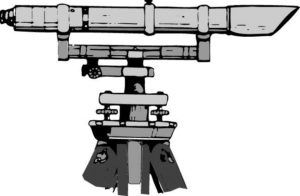 CorrectIncorrect
 -
Question 6 of 100
6. Question
Identify type of level:
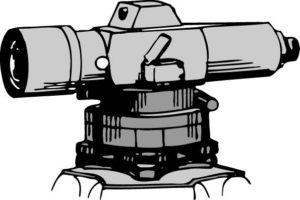 CorrectIncorrect
 -
Question 7 of 100
7. Question
Identify type of level:
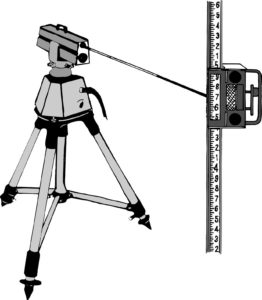 CorrectIncorrect
 -
Question 8 of 100
8. Question
Identify type of level:
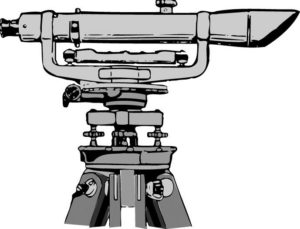 CorrectIncorrect
 -
Question 9 of 100
9. Question
Identify part of level:
#9
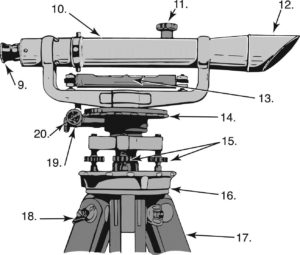 CorrectIncorrect
 -
Question 10 of 100
10. Question
Identify part of level:
#10
CorrectIncorrect -
Question 11 of 100
11. Question
Identify part of level:
#11
CorrectIncorrect -
Question 12 of 100
12. Question
Identify part of level:
#12
CorrectIncorrect -
Question 13 of 100
13. Question
Identify part of level:
#13
CorrectIncorrect -
Question 14 of 100
14. Question
Identify part of level:
#14
CorrectIncorrect -
Question 15 of 100
15. Question
Identify part of level:
#15
CorrectIncorrect -
Question 16 of 100
16. Question
Identify part of level:
#16
CorrectIncorrect -
Question 17 of 100
17. Question
Identify part of level:
#17
CorrectIncorrect -
Question 18 of 100
18. Question
Identify part of level:
#18
CorrectIncorrect -
Question 19 of 100
19. Question
Identify part of level:
#19
CorrectIncorrect -
Question 20 of 100
20. Question
Identify part of level:
#20
CorrectIncorrect -
Question 21 of 100
21. Question
A use of a transit is to measure horizontal angles
CorrectIncorrect -
Question 22 of 100
22. Question
A use of a transit is to measure vertical angles
CorrectIncorrect -
Question 23 of 100
23. Question
A use of a transit is to measure elevations
CorrectIncorrect -
Question 24 of 100
24. Question
A use of a transit is to measure horizontal distances
CorrectIncorrect -
Question 25 of 100
25. Question
A use of a transit is to lay out boundaries and building lines
CorrectIncorrect -
Question 26 of 100
26. Question
A use of a transit is to establish elevations and grades
CorrectIncorrect -
Question 27 of 100
27. Question
A use of a transit is to record legal land descriptions
CorrectIncorrect -
Question 28 of 100
28. Question
Identify type of transit:
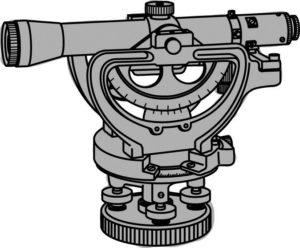 CorrectIncorrect
 -
Question 29 of 100
29. Question
Identify type of transit:
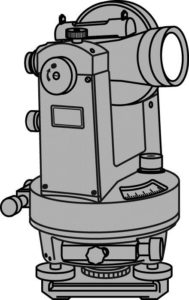 CorrectIncorrect
 -
Question 30 of 100
30. Question
Identify type of transit:
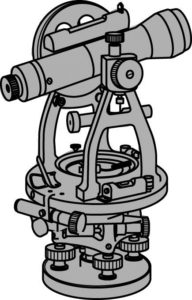 CorrectIncorrect
 -
Question 31 of 100
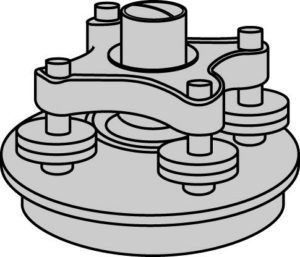
31. Question
Label major component of a transit:
 CorrectIncorrect
 -
Question 32 of 100
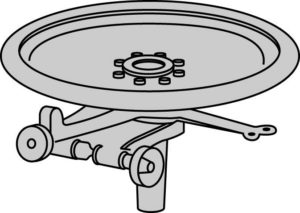
32. Question
Label major component of a transit:
 CorrectIncorrect
 -
Question 33 of 100
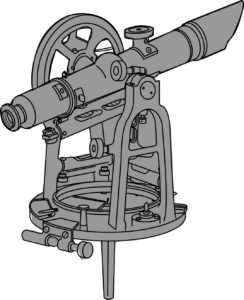
33. Question
Label major component of a transit:
 CorrectIncorrect
 -
Question 34 of 100
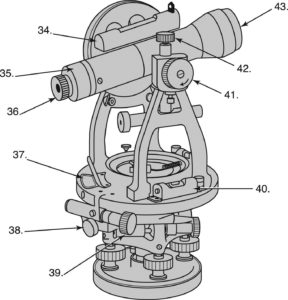
34. Question
Identify part of the transit:
#34
 CorrectIncorrect
 -
Question 35 of 100
35. Question
Identify part of the transit:
#35
CorrectIncorrect -
Question 36 of 100
36. Question
Identify part of the transit:
#36
CorrectIncorrect -
Question 37 of 100
37. Question
Identify part of the transit:
#37
CorrectIncorrect -
Question 38 of 100
38. Question
Identify part of the transit:
#38
CorrectIncorrect -
Question 39 of 100
39. Question
Identify part of the transit:
#39
CorrectIncorrect -
Question 40 of 100
40. Question
Identify part of the transit:
#40
CorrectIncorrect -
Question 41 of 100
41. Question
Identify part of the transit:
#41
CorrectIncorrect -
Question 42 of 100
42. Question
Identify part of the transit:
#42
CorrectIncorrect -
Question 43 of 100
43. Question
Identify part of the transit:
#43
CorrectIncorrect -
Question 44 of 100
44. Question
Identify part of the transit:
#44
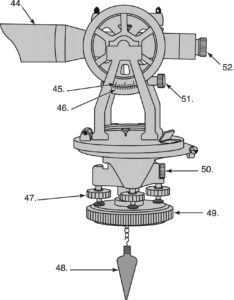 CorrectIncorrect
 -
Question 45 of 100
45. Question
Identify part of the transit:
#45
CorrectIncorrect -
Question 46 of 100
46. Question
Identify part of the transit:
#46
CorrectIncorrect -
Question 47 of 100
47. Question
Identify part of the transit:
#47
CorrectIncorrect -
Question 48 of 100
48. Question
Identify part of the transit:
#48
CorrectIncorrect -
Question 49 of 100
49. Question
Identify part of the transit:
#49
CorrectIncorrect -
Question 50 of 100
50. Question
Identify part of the transit:
#50
CorrectIncorrect -
Question 51 of 100
51. Question
Identify part of the transit:
#51
CorrectIncorrect -
Question 52 of 100
52. Question
Identify part of the transit:
#52
CorrectIncorrect -
Question 53 of 100
53. Question
Identify different type of vernier:
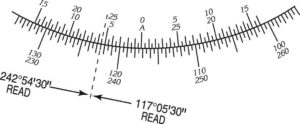 CorrectIncorrect
 -
Question 54 of 100
54. Question
Identify different type of vernier:
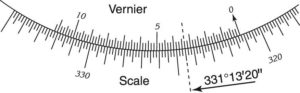 CorrectIncorrect
 -
Question 55 of 100
55. Question
Identify different type of vernier:
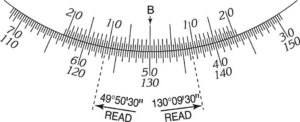 CorrectIncorrect
 -
Question 56 of 100
56. Question
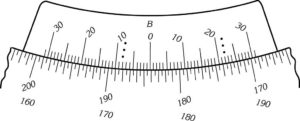
Interpret readings on different styles of verniers.
Clockwise
 CorrectIncorrect
 -
Question 57 of 100
57. Question
Interpret readings on different styles of verniers.
Counterclockwise
CorrectIncorrect -
Question 58 of 100
58. Question
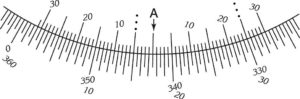
Interpret readings on different styles of verniers.
Clockwise
 CorrectIncorrect
 -
Question 59 of 100
59. Question
Interpret readings on different styles of verniers.
Counterclockwise
CorrectIncorrect -
Question 60 of 100
60. Question
Not using a magnifying glass is a typical mistake made in reading verniers.
CorrectIncorrect -
Question 61 of 100
61. Question
Failing to determine the least count correctly is a typical mistake made in reading verniers.
CorrectIncorrect -
Question 62 of 100
62. Question
Failing to read directly on the line (parallax error) is a typical mistake made in reading verniers.
CorrectIncorrect -
Question 63 of 100
63. Question
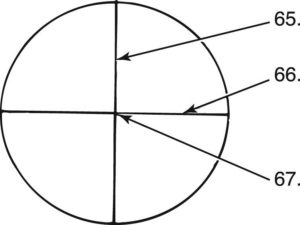
Label vertical and horizontal cross hairs and line of sight on a leveling instrument.
#65
 CorrectIncorrect
 -
Question 64 of 100
64. Question
Label vertical and horizontal cross hairs and line of sight on a leveling instrument.
#66
CorrectIncorrect -
Question 65 of 100
65. Question
Label vertical and horizontal cross hairs and line of sight on a leveling instrument.
#67
CorrectIncorrect -
Question 66 of 100
66. Question
Keep instrument in carrying case when not in use for proper care of leveling instruments.
CorrectIncorrect -
Question 67 of 100
67. Question
Reading the wrong direction from zero is a typical mistake made in reading verniers.
CorrectIncorrect -
Question 68 of 100
68. Question
Adding 10, 15, 20, or 30 minutes when the index is beyond those marks is a typical mistake made in reading verniers.
CorrectIncorrect -
Question 69 of 100
69. Question
Remove instrument from carrying case by lifting by the telescope barrel for proper care of leveling instruments.
CorrectIncorrect -
Question 70 of 100
70. Question
Always remove the lens before storing for proper care of leveling instruments.
CorrectIncorrect -
Question 71 of 100
71. Question
Only use sunshade in bright, sunny conditions for proper care of leveling instruments.
CorrectIncorrect -
Question 72 of 100
72. Question
Carry tripod over your shoulder with instrument in front of you for proper care of leveling instruments.
CorrectIncorrect -
Question 73 of 100
73. Question
Loosen leveling screws before returning instrument to carrying case for proper care of leveling instruments.
CorrectIncorrect -
Question 74 of 100
74. Question
Place lens and tripod caps in carrying case after removing them from instrument for proper care of leveling instruments.
CorrectIncorrect -
Question 75 of 100
75. Question
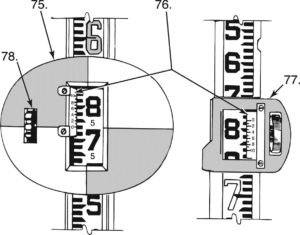
Identify part of a leveling rod:
#75
 CorrectIncorrect
 -
Question 76 of 100
76. Question
Identify part of a leveling rod:
#76
CorrectIncorrect -
Question 77 of 100
77. Question
Identify part of a leveling rod:
#77
CorrectIncorrect -
Question 78 of 100
78. Question
Identify part of a leveling rod:
#78
CorrectIncorrect -
Question 79 of 100
79. Question
Holds target in place
CorrectIncorrect -
Question 80 of 100
80. Question
Holds rod open when extended
CorrectIncorrect -
Question 81 of 100
81. Question
Helps make measurements within a certain range on leveling rod; holds vernier scale
CorrectIncorrect -
Question 82 of 100
82. Question
Most commonly used direct-reading rods are graduated in eighths of an inch.
CorrectIncorrect -
Question 83 of 100
83. Question
Most commonly used direct-reading rods are graduated in eighths of an inch
CorrectIncorrect -
Question 84 of 100
84. Question
Most commonly used direct-reading rods are graduated in quarter inch increments
CorrectIncorrect -
Question 85 of 100
85. Question
Most commonly used direct-reading rods are graduated in hundredths of a foot
CorrectIncorrect -
Question 86 of 100
86. Question
Enables reading to the nearest thousandth of a foot or nearest sixty-fourth of a foot
CorrectIncorrect -
Question 87 of 100
87. Question
Identify markings on a direct-reading rod
#87
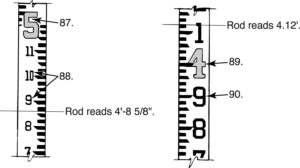 CorrectIncorrect
 -
Question 88 of 100
88. Question
Identify markings on a direct-reading rod
#88
CorrectIncorrect -
Question 89 of 100
89. Question
Identify markings on a direct-reading rod
#89
CorrectIncorrect -
Question 90 of 100
90. Question
Identify markings on a direct-reading rod
#90
CorrectIncorrect -
Question 91 of 100
91. Question
Identify hand signals used by the instrument person to guide the rod person.
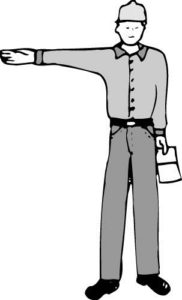 CorrectIncorrect
 -
Question 92 of 100
92. Question
Identify hand signals used by the instrument person to guide the rod person.
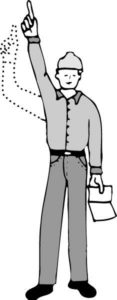 CorrectIncorrect
 -
Question 93 of 100
93. Question
Identify hand signals used by the instrument person to guide the rod person.
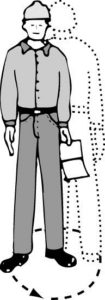 CorrectIncorrect
 -
Question 94 of 100
94. Question
Identify hand signals used by the instrument person to guide the rod person.
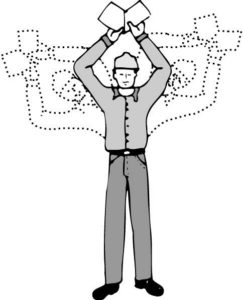 CorrectIncorrect
 -
Question 95 of 100
95. Question
Identify hand signals used by the instrument person to guide the rod person.
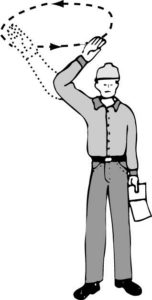 CorrectIncorrect
 -
Question 96 of 100
96. Question
Identify hand signals used by the instrument person to guide the rod person.
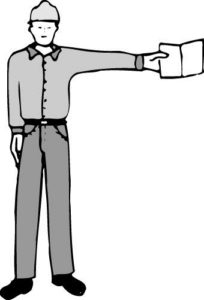 CorrectIncorrect
 -
Question 97 of 100
97. Question
Identify hand signals used by the instrument person to guide the rod person.
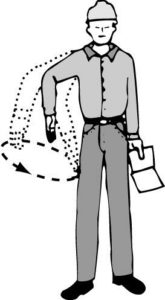 CorrectIncorrect
 -
Question 98 of 100
98. Question
Identify hand signals used by the instrument person to guide the rod person.
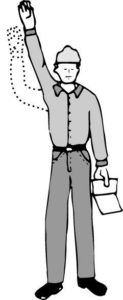 CorrectIncorrect
 -
Question 99 of 100
99. Question
Identify hand signals used by the instrument person to guide the rod person.
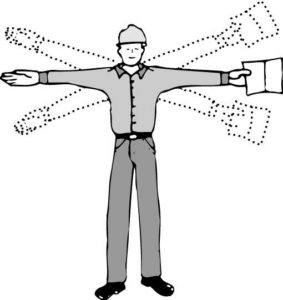 CorrectIncorrect
 -
Question 100 of 100
100. Question
Identify hand signals used by the instrument person to guide the rod person.
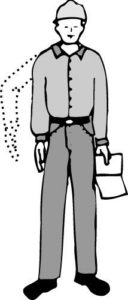 CorrectIncorrect